
On this page
What is psyllium husk?
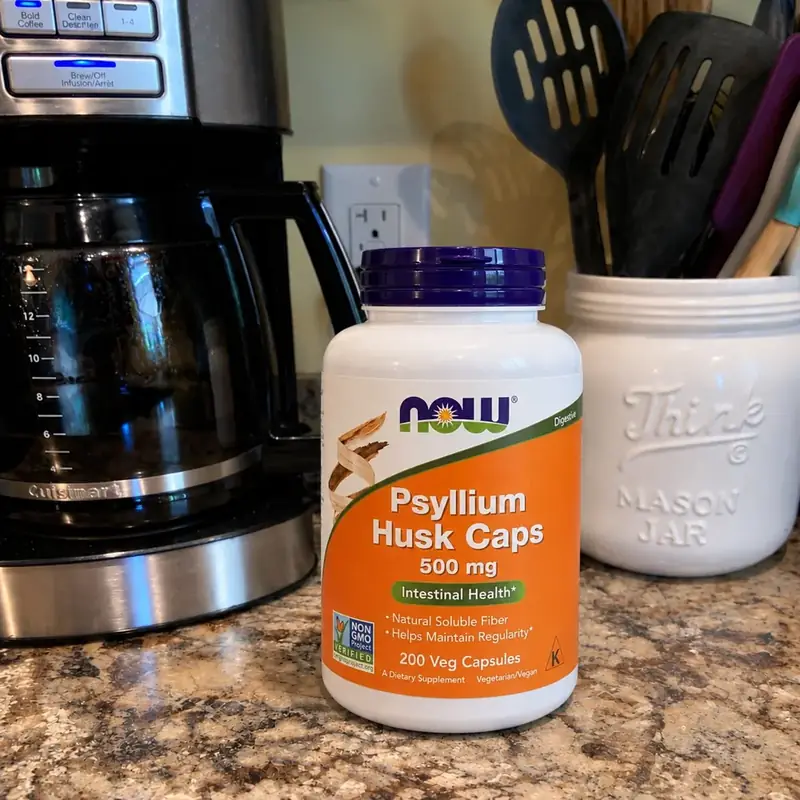
Psyllium is a soluble fiber made from the husks of Plantago ovata seeds. Mix the loose husk with liquid and it swells into a gel-like texture. Put the same basic ingredient into capsules and you get a more convenient format, usually with a much smaller amount per capsule than a spoonful of loose husk.
Psyllium is not a detox, fat burner or exotic biohack. It is fiber. That sounds less exciting, but the evidence around soluble fiber is considerably more useful than most supplement hype.
My two cents: I prefer the capsules
I have both forms at home. Personally, I prefer psyllium husk capsules over mixing the loose powder or husks into a drink. For me, the capsules are simply easier to work into a routine. There is no claim here that capsules are medically better—they are just the format I prefer as a guy over 40.
The trade-off is important: convenience can require swallowing several capsules to equal the fiber in a larger serving of loose psyllium. Always compare the actual grams of fiber on the label rather than assuming one capsule equals one scoop.
Why fiber deserves more attention after 40
Fiber is not an age-40-only nutrient, but it becomes easy to overlook when your diet starts revolving around protein, convenience foods and whatever you can eat between work and everything else. Mayo Clinic lists a general fiber target of 38 grams per day for men age 50 or younger and 30 grams for men older than 50, while needs can vary with calorie intake and individual circumstances.
Whole foods should do most of the work because beans, vegetables, fruit, whole grains, nuts and seeds bring nutrients along with fiber. A supplement is better thought of as a gap-filler than a replacement for plants.
What psyllium does in the gut
Psyllium absorbs water and forms a viscous gel. That physical behavior helps explain why it can support stool consistency and regularity. Soluble viscous fiber can also affect cholesterol absorption and post-meal glucose responses. Harvard Health has highlighted evidence that psyllium can modestly lower LDL cholesterol when used consistently.
That does not mean everyone should start chasing a therapeutic dose on their own. It means psyllium has a real physiological function that is much more grounded than vague claims about 'cleansing' your digestive system.
Powder vs capsules: what actually changes?
Loose psyllium is efficient. You can get a meaningful amount of fiber without swallowing a handful of capsules, and it is often cheaper per gram. The downside is texture. Once liquid hits psyllium, it thickens quickly, so you need to stir and drink it rather than leave the glass sitting on the counter.
Capsules remove most of that sensory issue. That is why I prefer them. But check the serving size: the bottle may call for multiple capsules, and you still need adequate fluid. Convenience does not cancel the fact that psyllium absorbs water.
How to introduce psyllium without overdoing it
More fiber is not always better overnight. Mayo Clinic specifically recommends increasing fiber gradually because a sudden jump can cause gas, bloating and cramping. Hydration matters too. If your usual diet is low in fiber, going straight from very little to a large supplement dose is exactly the kind of enthusiasm that can make a good habit miserable.
Follow the product directions and start conservatively. If you take medications, ask a pharmacist about timing because fiber supplements can affect how some medicines are absorbed. People with swallowing problems, bowel narrowing, prior obstruction or significant gastrointestinal conditions should get individualized guidance rather than experimenting.
The two forms I keep around
NOW Psyllium Husk Caps
My preference for convenience. No mixing, easier to work into my routine. Compare the serving size and grams of fiber on the label.
Check on Amazon →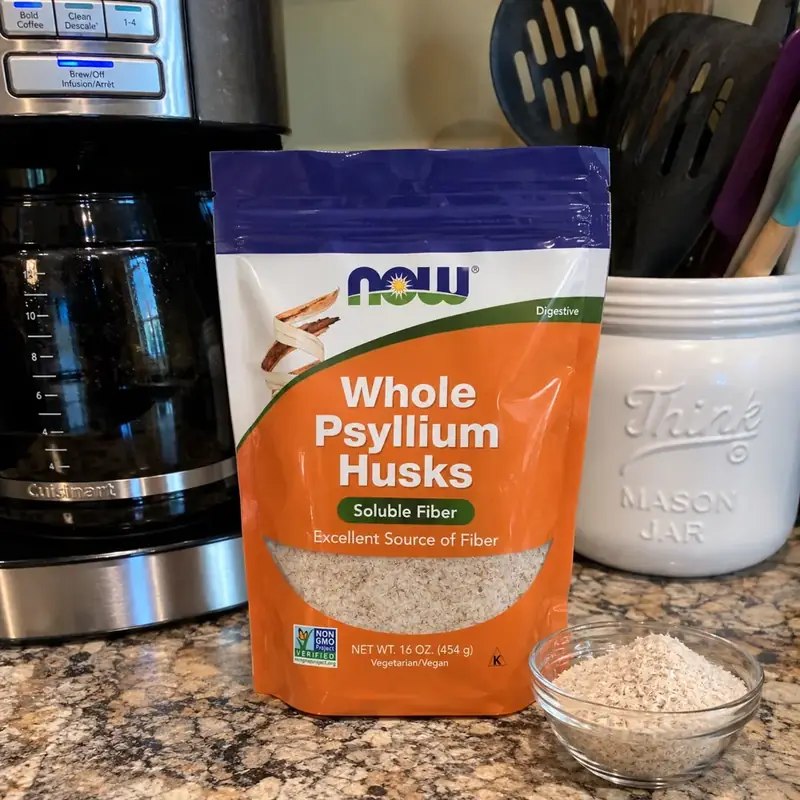
NOW Whole Psyllium Husks
The loose-husk option if you prefer mixing psyllium into water or food. It can provide more fiber per serving without swallowing multiple capsules.
Check on Amazon →Disclosure: As an Amazon Associate, Vitamin Hippo may earn from qualifying purchases at no extra cost to you.
What I would want to know before making psyllium a habit
The first thing I would check is the Nutrition Facts or Supplement Facts panel rather than the size of the container. Products can differ in serving size, grams of psyllium and grams of dietary fiber. That is especially important with capsules because the front of a bottle can look convenient while the actual serving may be several capsules.
Second, I would decide what problem I am actually trying to solve. If the goal is simply to improve an otherwise low-fiber diet, I would look at food first and use psyllium as backup. If regularity is the reason, consistency, fluid intake and the rest of the diet matter too. If cholesterol is the concern, that is worth discussing in the context of the whole cardiovascular picture rather than treating a fiber supplement as a substitute for medical care.
Third, I would give my body time to adapt. Fiber is one of those areas where doing more because you are impatient can backfire. A modest amount that you tolerate and use consistently is more useful than a large amount that leaves you bloated and makes you abandon the routine.
I also would not get hung up on whether the powder looks more 'natural' than capsules. They are two delivery formats for the same basic fiber. For me, the capsule wins because convenience matters. For someone who hates swallowing pills, the loose husk is obviously the better fit. The best format is the one you can use correctly and consistently.
One last practical point: psyllium thickens. If you use loose husk, mix it immediately and follow the label's fluid instructions. Do not dry-scoop it. If swallowing is difficult for you or you have been told you have narrowing anywhere in your digestive tract, this is a situation for professional guidance rather than trial and error.
A practical way to judge whether it is helping is to keep the rest of your routine fairly steady for a while. If you change your fiber supplement, water intake, diet and exercise all at once, it becomes difficult to know what your digestion is responding to. I prefer simple experiments: introduce one manageable habit, give it time, and pay attention. That approach is less dramatic than a cleanse or challenge, but it is far more useful for deciding what actually belongs in your everyday routine.
Bottom line
Psyllium husk is one of those unglamorous supplements that makes sense precisely because it is not trying to be magical. It is a concentrated source of soluble fiber with useful evidence behind it.
I prefer capsules because they fit my routine better. Someone else may prefer loose husk because it is efficient and easy to measure. Either way, increase fiber gradually, drink enough fluid and keep whole-food fiber at the center of the diet.
Sources & further reading

Tim Lekach founded Vitamin Hippo and has written about supplements, men’s health and healthy aging since the site’s original run. Vitamin Hippo separates personal experience, manufacturer claims and published evidence.
More about Tim and Vitamin Hippo →