
I spent a ridiculous amount of time searching social media for ways couples were trying to create more intimacy. Some ideas were thoughtful. Some were basically new labels for things healthy couples have probably done forever. A few sounded like something invented for a 20-second video.
Still, I kept coming back to the same question: what can I actually use in real life? I am over 40, I am in a relationship with a wonderful woman, and I care about keeping attraction, closeness and sexual energy alive rather than assuming they will take care of themselves.
The biggest thing I learned is that my libido does not live in a bottle. For me, the better approach has been a combination of feeling better physically, being more deliberate about connection with my partner, and paying attention to sexual performance without turning sex into a performance test. These eight ideas are the ones I found most useful to think about and experiment with.
My quick answer: it was never one trick
If somebody asked me what increased intimacy for me after 40, I would not point to one vegetable, supplement, workout or bedroom technique. It has been the accumulation of small things. When I am sleeping better, training, eating reasonably well, feeling confident in my body and actually connecting with my partner during the day, intimacy feels less like something that has to be switched on at 10:30 at night.
That fits surprisingly well with the research. Sexual desire in long-term relationships is not a fixed switch, and research reviews describe it as something influenced by individual and relationship factors. Research on couples also finds that the quality of sexual communication is associated with sexual and relationship satisfaction. That does not prove that one conversation creates desire, but it supports something I have learned personally: connection and communication matter. See the meta-analysis on sexual communication →
The 8 intimacy ideas I tried to bring into real life
1. A “sex menu”
The phrase sounds more dramatic than the idea. A sex menu is simply a way of talking about what each person likes, might be curious about, does not like, or is not interested in right now. The useful part for me is that it gets preferences out of our heads. Nobody has to guess.
I do not think it needs to become a spreadsheet or a formal negotiation. In my relationship, the spirit of the idea matters more than the label: being comfortable enough to say what feels good, what sounds fun, what I am not into, and asking my partner the same things without treating her answer as a judgment of me.
That distinction between quality and sheer frequency of communication is worth remembering. A 2022 meta-analysis covering 93 studies found positive associations between sexual communication and both sexual and relationship satisfaction, with communication quality showing stronger associations than frequency alone. Association is not causation, but it gives this idea more substance than a social-media trend. Research details →
2. Micro-romance
This may be my favourite concept because it is so normal. Micro-romance means small signals of affection during ordinary life instead of expecting romance to appear only on date night. A kiss in the kitchen. A genuine compliment. Touching her shoulder when I walk by. Sending a message that has nothing to do with errands. Making her coffee. Telling her she looks great.
For me, those little things change the tone of the day. They are not transactions and they are not a down payment on sex later. That would defeat the purpose. They are reminders that we are partners and that I still notice her.
3. Analogue intimacy
This is basically the opposite of sitting beside each other while both of us disappear into separate screens. I use “analogue intimacy” to mean periods where the phones are down and we are actually present. It might be talking, cooking, sitting outside, going for a drive, having coffee or just lying together without simultaneously checking notifications.
I noticed that a phone can make two people who are physically six inches apart feel miles away. I am not anti-phone—I run websites and spend plenty of time online. I just do not want every quiet moment automatically filled by a screen.
4. Parallel play
Parallel play sounds like the opposite of intimacy until you try it. We can be in the same room doing different things and still feel connected. One person reads while the other watches something. One cooks while the other sits nearby. We do not have to manufacture constant conversation.
For me, the appeal is low pressure. Long-term connection cannot consist only of elaborate dates and intense conversations. Sometimes being comfortable together is the point. It creates more shared time without demanding that every minute be “quality time.”
5. Intimacy stacking
I think of intimacy stacking the same way people talk about habit stacking: attach connection to something that already happens. If we are going for a walk anyway, make part of it phone-free. If we have coffee in the morning, sit together for ten minutes instead of carrying the mugs to separate screens. If we are getting into bed, talk before grabbing the phone.
The reason this works for me is practical: I do not have to create another event on the calendar. I am putting connection inside routines that already exist.
6. Desire mapping
This was one of the more useful ideas I found because desire is not only about what turns me on. It is also about what turns desire off. Stress, exhaustion, feeling rushed, unresolved tension, too much alcohol, a bad night of sleep, feeling disconnected or simply having a lot on my mind can all change the equation.
Desire mapping, as I use the term, is paying attention to patterns. When do I feel most connected? What conditions make intimacy easier? What consistently kills the mood? What is different on the days when attraction feels effortless?
I am not trying to diagnose myself from a journal. I am trying to notice my own life. Research reviews of desire in long-term relationships likewise describe sexual desire as variable and influenced by multiple individual and interpersonal factors rather than as one simple biological meter. See the systematic review →
7. Screen-free evenings or date nights
I do not think every evening needs to be screen-free. That would be unrealistic for me. But deliberately removing screens for a block of time changes where my attention goes. There is no infinite scroll competing with the person sitting beside me.
Sometimes we make it a date. Sometimes it is just dinner. The important part is that the absence of the screen creates room for conversation, eye contact, touch and boredom—which is not always a bad thing. Boredom can make you turn toward each other.
8. Connection rituals
This is the least flashy and maybe the most sustainable: repeatable things that belong to us. Walks. Meals. Bedtime conversations. Coffee. Checking in after work. A favourite place. A weekend routine.
A ritual does not have to be romantic on paper. Its value is predictability. It gives the relationship recurring points of contact even when life gets busy. I have found that intimacy is easier to maintain when connection is already woven through the week instead of being something we remember only when we want sex.
None is a trick for “getting” sex. They are ways I try to create more attention, openness and connection in my relationship. Consent and genuine mutual interest come first. If an intimacy idea starts feeling manipulative or transactional, I think it has missed the point.
What I changed physically
The relationship side is only half of my story. I also pay more attention to how I feel physically than I did when I was younger. Energy, confidence, stamina, sleep and stress all affect how interested in sex I feel.
Exercise and feeling capable
I train regularly, and I notice a difference in how I feel when I am active. That is one reason the strength and cardio side of Vitamin Hippo has become so important to me. I do farmer carries, suitcase carries, dead hangs and other strength work, and I use cardio as part of the bigger picture rather than looking for a “libido workout.”
There is research behind the broader exercise/sexual-function connection. A 2025 systematic review found physical activity was associated with better male sexual function across the included studies, while a meta-analysis of randomized trials found aerobic exercise improved erectile-function scores in men studied. Those findings do not mean my workouts caused my own changes, and libido is not the same thing as erection quality, but exercise is a much more credible foundation than chasing a miracle ingredient. 2025 systematic review →
If you want the cardio side, I wrote a full guide to Zone 2 cardio. If strength and staying capable after 40 is more your thing, start with Old Man Strength or grip strength after 40.
How I changed my diet
I also moved my everyday eating toward more vegetables—broccoli, cauliflower, asparagus and Brussels sprouts are common for me—and more protein from foods such as chicken breast and chicken thighs. I like how I feel eating this way, and it supports the way I train.
I want to be careful here: I cannot tell you those foods increased my libido. I changed several things at once. I am not running a controlled experiment on myself, and I do not want to reverse-engineer a scientific claim from a personal experience. They are simply part of the routine I was following during a period when I felt better physically and sexually.
For the nutrition side of training, my protein after 40 guide goes deeper. I would rather use food to support my overall health and training than label broccoli a testosterone booster because that makes a better headline.
Sleep, recovery and stress
I pay more attention to sleep now too. When I am exhausted or stressed, libido is not operating in isolation. I use an Oura Ring to watch my own sleep and recovery trends, which I discuss in my smart rings for sleep guide. I also have guides on waking up at 3 AM, recovery after 40 and the afternoon energy crash.
None of those articles promises a libido fix. That is exactly the point. I increasingly see sexual health as connected to the rest of my life rather than as a separate compartment.
Where supplements fit for me
I have personally noticed better sexual stamina while using certain supplements. Again, that sentence needs the word personally. It is my experience, not a guarantee and not proof that the supplement caused the change.
VigRX Plus is one product I have actually incorporated into the bigger picture. I had a positive experience with it. But I do not think it makes sense to turn this entire intimacy article into a sales page. If you are curious about the product, I wrote a dedicated VigRX Plus review where I separate my experience from the manufacturer's claims and look at the published study on the formula.
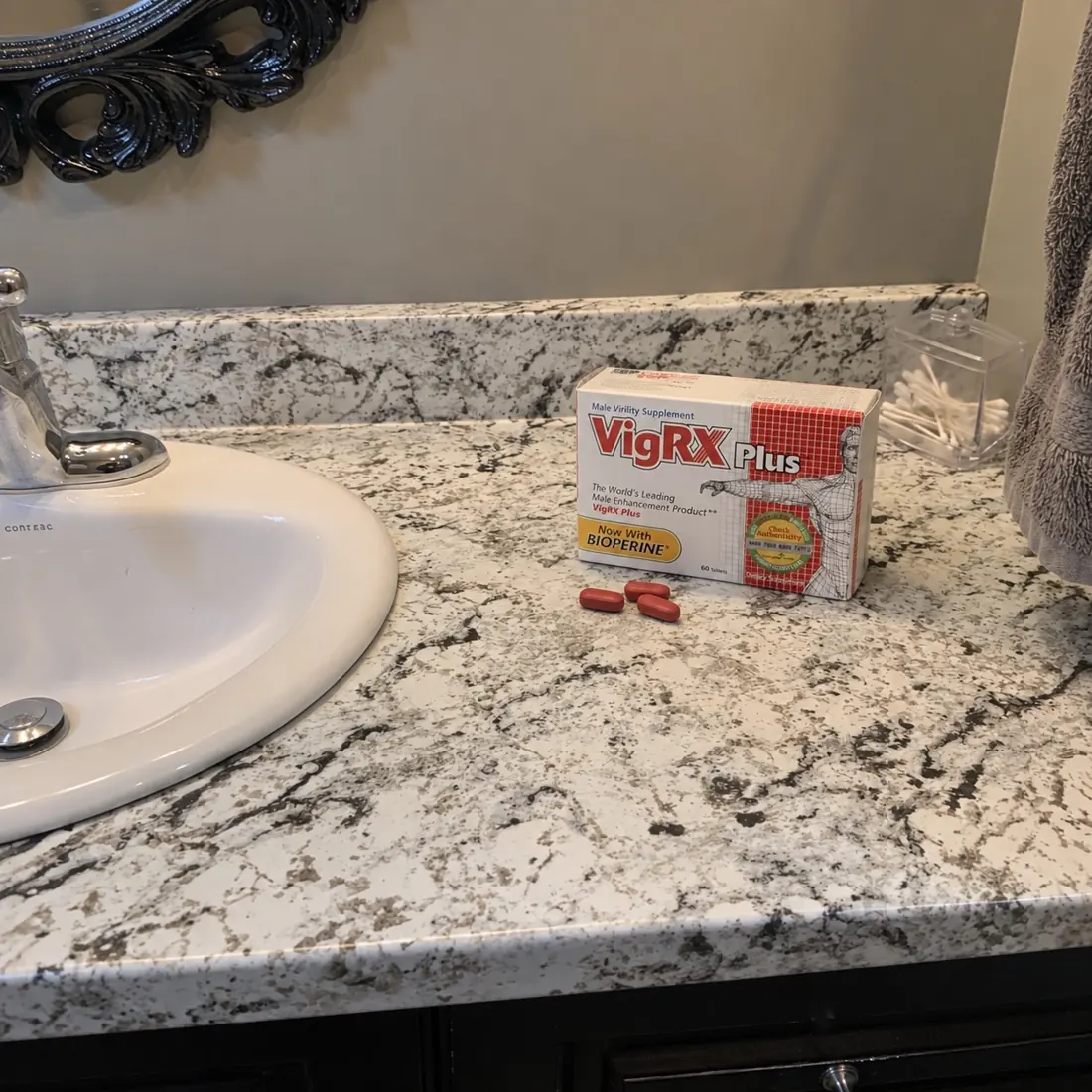
VigRX Plus — the supplement I have personally tried
My experience was positive, but I would read the full review before buying. It covers the study, ingredients, realistic expectations and the limitations of what we can claim.
Read my full VigRX Plus review →
View VigRX Plus →Affiliate disclosure: If you purchase through this link, Vitamin Hippo may earn a commission at no extra cost to you.
What about testosterone?
Low libido can sometimes overlap with low testosterone, but I would not assume every change in desire after 40 is a testosterone problem. Sleep, medications, stress, relationship context, mental health, alcohol, general health and many other factors can matter. If the change is persistent or concerning, that is a better reason to talk with a clinician than to start buying “test boosters.”
Vitamin Hippo already has a deeper guide on low libido after 40, plus guides to testosterone after 40 and free vs. total testosterone. Those are better places for the hormone discussion than trying to force testosterone into every intimacy conversation.
When I would stop treating this as a lifestyle experiment
A gradual ebb and flow in desire is one thing. A sudden or persistent change, pain, major erection changes, symptoms that started with a medication, or anything that is worrying you deserves proper evaluation. Sexual-health changes can have many causes, and “try another supplement” is not an adequate answer to all of them.
Likewise, if the core issue is conflict, consent, mismatched expectations or communication that keeps breaking down, a supplement is not going to solve the relationship part. A qualified therapist or sex therapist can be more relevant than another bottle.
What has mattered most for me
After trying these ideas, I do not think my best lesson is “do these eight things and your libido goes up.” My lesson is that intimacy became easier to think about when I stopped treating it as one isolated outcome.
I want to feel strong. I want energy. I want to sleep well. I want to be attracted to my partner and make sure she knows I am attracted to her. I want us to talk openly. I want phones to occasionally disappear. I want small rituals that belong to us. And yes, I am interested in supplements and sexual performance—but as one layer of a much bigger life.
That is the approach I intend to keep taking after 40: connection first, the physical foundations next, and supplements in their proper place.
Sources & further reading
- Mallory A. Dimensions of couples' sexual communication, relationship satisfaction, and sexual satisfaction: a meta-analysis.
- Mark KP, Lasslo JA. Maintaining Sexual Desire in Long-Term Relationships: A Systematic Review and Conceptual Model.
- da Silva ML et al. Influence of physical activity practice on sexual function in men: a systematic review.
- Effect of aerobic exercise on erectile function: systematic review and meta-analysis of randomized controlled trials.

Tim Lekach founded Vitamin Hippo in 2020 and writes from the perspective of a man over 40 who actually tries many of the routines and products discussed on the site. Personal observations are identified as experience and kept separate from published evidence and manufacturer claims.
More about Tim and Vitamin Hippo →